Virtual Art Tours
The recent COVID-19 pandemic significantly affects art, with art exhibitions being closed in various countries to prevent the spread of the virus. Consequently, artists were restrained from showcasing their art pieces. A growing need emerged for alternative formats of displayed art to the conventional formats in which people visit exhibitions. While surfing online for art galleries, I was fortunate to bump into two virtual art exhibitions: “31 Under 30 Exhibition” and “Social Distancing Virtual Exhibition.” Through these virtual tours, I experienced exciting art pieces in formats that were hitherto never considered. The format was more suitable for viewing and an entry compared to the traditional exhibition formats. This adventure opened up a box of thought about how artists could showcase their work cheaply and to a broader audience.
Michael Rose, one of the world’s glorified curators and gallerists, is one of the people fronting the switch to virtual art exhibition formats. With the constant and never-ending cancellation and postponement of physical art exhibitions following the closure of most of them, there has never been a better time to use an online platform to display artistic works. Virtual platforms can be used to display different themes, styles, and designs of art. Notably, 3D artworks are one of the most thrilling to watch virtually. The headset gadgets used in virtual tours create a sense of direct connection to various artworks. Those viewing artworks get the feeling that they are in physical art exhibitions viewing artistic pieces. This technological advancement is disruptive and sustainable in the current times when the pandemic is still affecting different countries.
Physical art exhibitions are typically restricted in terms of the media by which art can be displayed. For instance, some physical art spaces may be ideal for 2D portraits and not 3D artwork. With virtual tours, artists can display the art of any media to different viewers across the world, provided they have access to the virtual tours. Installations, paintings, and sculptures can all be easily displayed through virtual art tours. This technological advancement alleviates the need for substantial art spaces to showcase art pieces. Virtual art platforms come in a variety of formats from which viewers can experience different art pieces. They include slideshows with artworks that can be easily zoomed in. They also include “walk-around” tours with voiceovers explaining other art pieces. Another format is 360-degree videos that are fully interactive. The different formats make virtual art tours a thrilling experience, as I noted in some of the exhibitions I managed to attend.
Some of the world’s greatest museums have been showcased to viewers virtually. The J Paul Getty Museum, Los Angeles, was displayed through Google Arts and Culture’s “museum-view” format. This allowed viewers to see the gallery spaces and click to view further information about different artworks. The garden terrace of the Getty can be viewed from the virtual trip, which offers an additional thrill for viewers. 360-degree videos provide an opportunity to view the Sistine Chapel images in the Vatican Museums, Rome. The National History Museum, London, corridors and gallery spaces can be displayed using 360-degree videos.
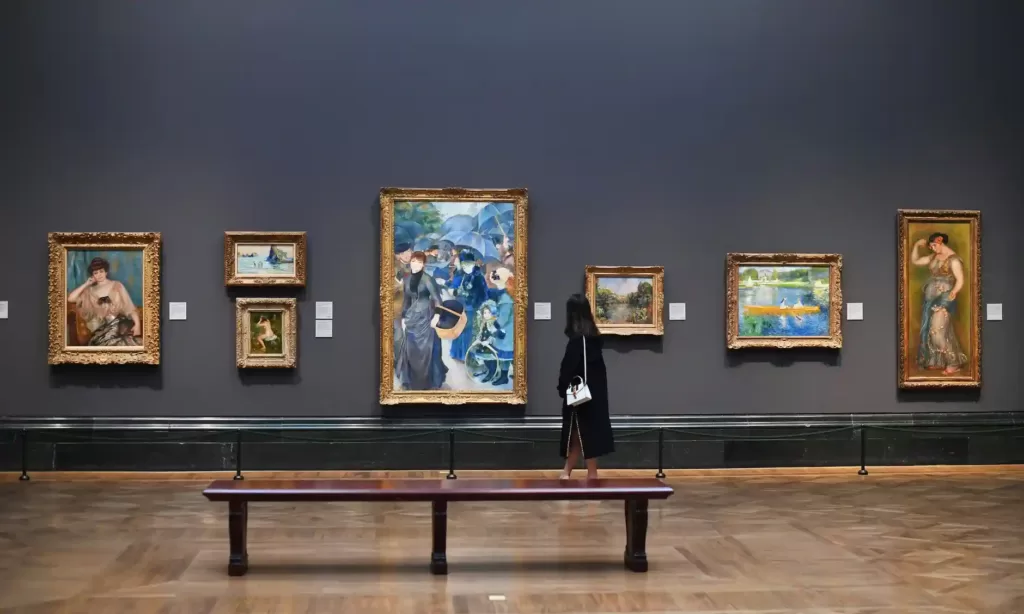
A woman walks through The National Gallery minutes before it closes until further notice, in London. Photograph: Dylan Martinez/Reuters (Image source: https://www.theguardian.com)
The recent pandemic, although it affected artists greatly, can be considered a blessing in disguise. It opened a new world of virtual tours that could be disruptive technology. I highly doubt if gallerists would prefer going back to the physical exhibitions if normalcy resumes. I envision a world where art will be shared virtually, and artists would market their pieces to corners of the globe they never thought they would reach. It calls for stakeholders in art galleries to invest in virtual tours as a sustainable alternative to the conventional formats. I look forward to having more virtual tours in the coming years.
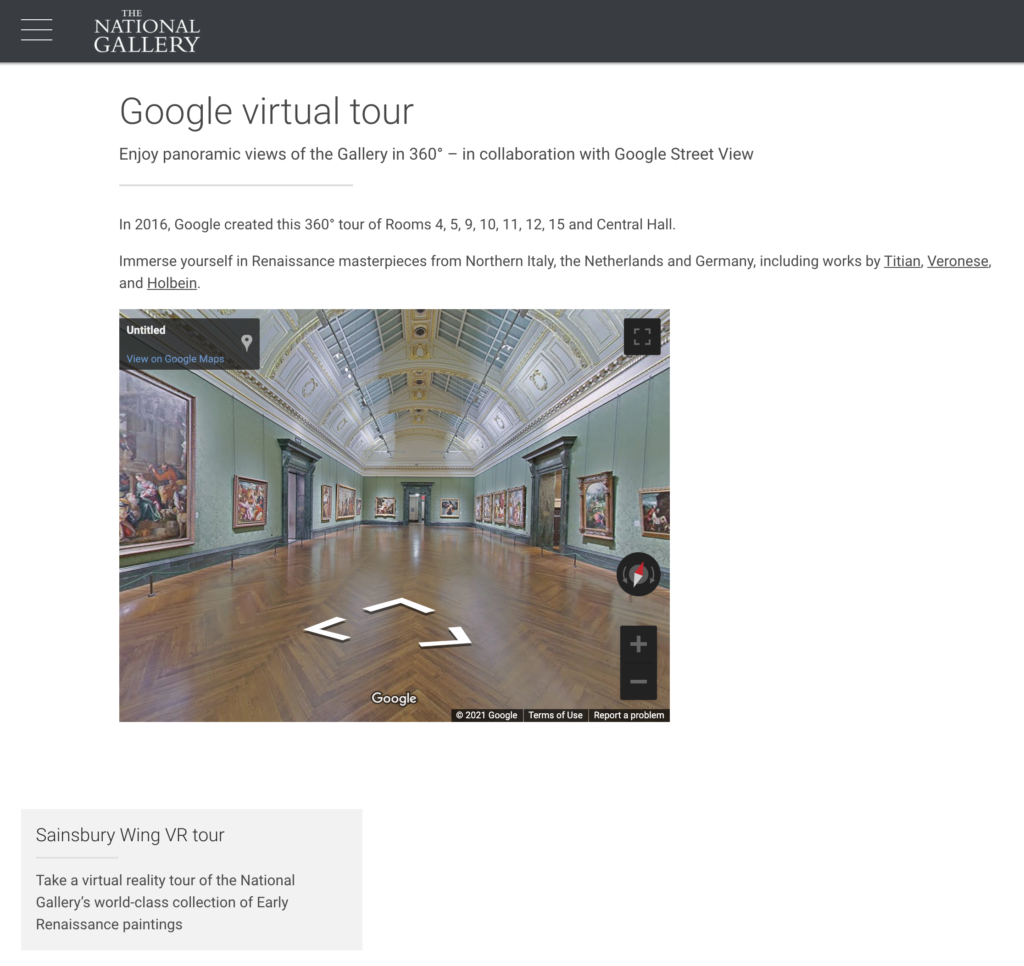
Virtual tour by Google street view – (Image source: https://www.nationalgallery.org.uk/visiting/virtual-tours/google-virtual-tour)
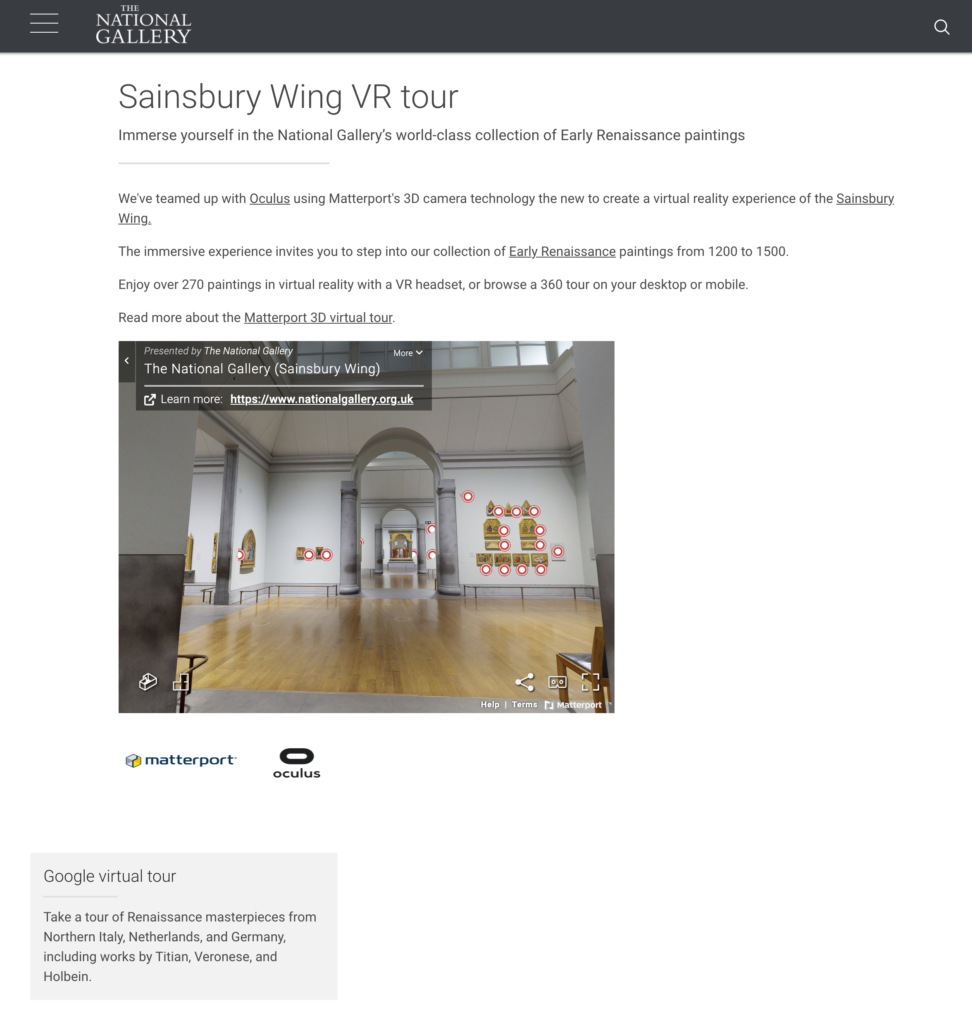
Virtual tour by Google with Matterport system and Oculus – (Image source: https://www.nationalgallery.org.uk/visiting/virtual-tours/google-virtual-tour)
References:
- Wilson A.. (2020). 10 of the world’s best virtual museum and art gallery tours. [Online] March 2020. Available at: https://www.theguardian.com/travel/2020/mar/23/10-of-the-worlds-best-virtual-museum-and-art-gallery-tours [Accessed: 13th June 2021]
- Romano A.. (2020). Experience the best museums from London to Seoul in the comfort of your own home. [Online] March 2020. Available at: https://www.travelandleisure.com/attractions/museums-galleries/museums-with-virtual-tours [Accessed: 13th June 2021]
- Kunstmatrix (2021). ART.SPACES Create high-quality 3D exhibitions of your art. [Online] Available at: https://artspaces.kunstmatrix.com/en [Accessed: 13th June 2021]
- The National Gallery (2021). Virtual tours of the National Gallery. [Online] Available at: https://www.nationalgallery.org.uk/visiting/virtual-tours [Accessed: 13th June 2021]
