
Design is one of the stages of the building process. Here I will elaborate on the design and development process steps. Design and development take much hard work, especially when the initial design concept is not established. I have struggled in the first two weeks with the concept idea. A designer’s work is a craft, one that needs skills that should be constantly sharpened. To design a successful project that is adaptable as time goes on, we must start from scratch and end with a fully complete design.
…The most important point here is the desire of the contemporary art museum to impress the public (Eckett and Edquist, 2019).
I proposed an art gallery that can also be built in the future. Suppose the project will be successful in the digital world when the notoriety increases visibility in the real world. The process is inversed comparing with the normal development in the
I proposed an art gallery that can also be built in the future. Suppose the project will be successful in the digital world when the notoriety increases visibility in the real world. The process is inversed comparing with the normal development in the present – to create a virtual tour, galleries scan a physical place and then transform it into a virtual one. In this concept, the evolution will follow the success, which will be tested online with time. The wow effect could be when the regular digital customers visit the physical place, familiar for them, but in the real world.
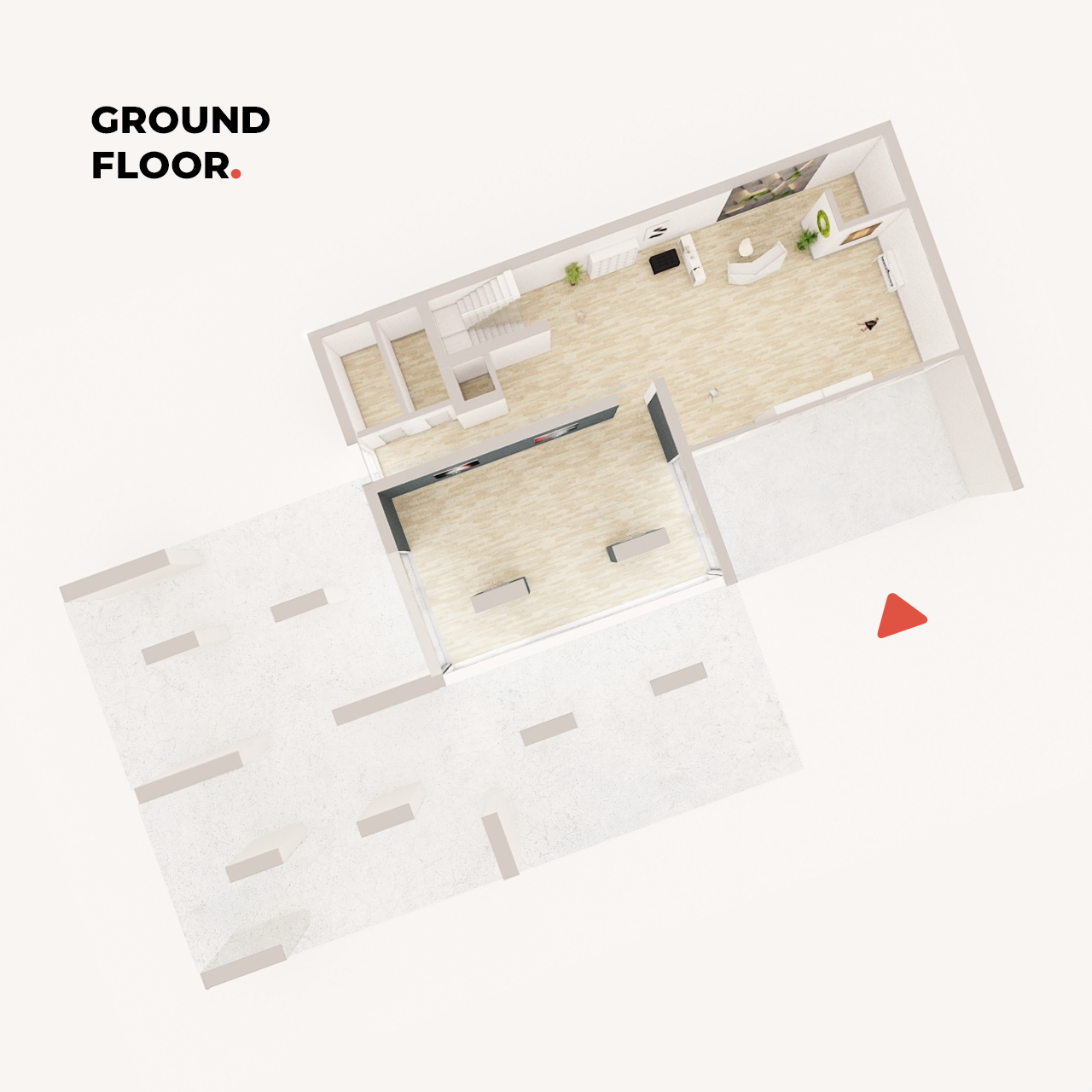
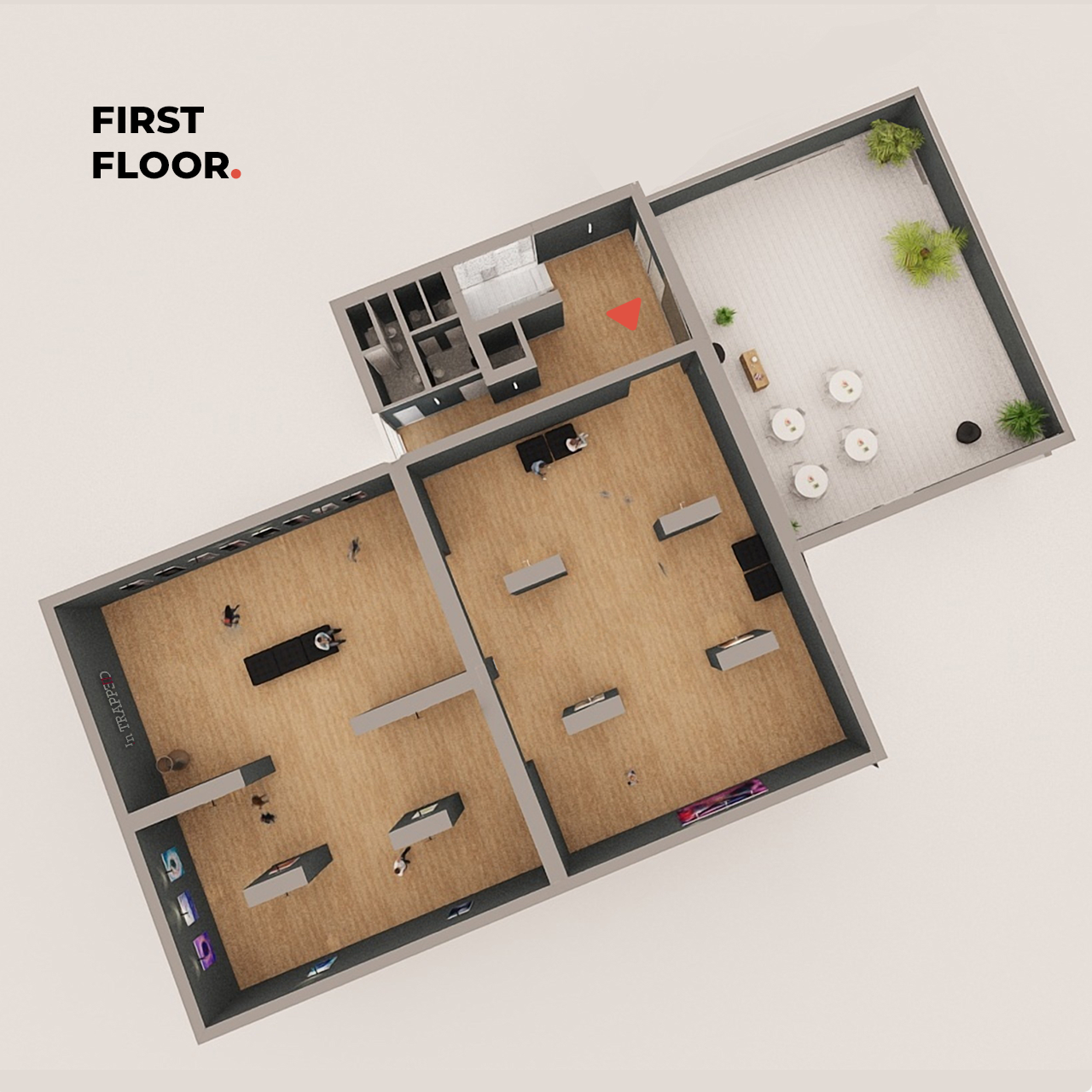
For this first part of my project – the first four weeks, everything was settled initially. The workflow was well known to me. I researched different typologies of plans suitable for an art gallery to inspire me for my final project. In the first week, I had in mind to start with an “L” shape architectural plan, but in the second week, I developed my project with the main gallery – three rooms connected being inspired by Golden Ratio. Using the golden ratio for the galleries, I had the feeling that I need to complete the volume with another floor, to equilibrate the volume vertically. I added the same rectangle that I had, slid on the plan, to create the ground floor. As I mentioned, the volume was crafted and adjusted in time, adding or cutting some parts from this project until the final shape.
During the time, the idea that the volume could have any kind of shape arose in my mind, with organic structures, but this concept is a little bit different because you will have the feeling to see a virtual exhibition just in the Digital world. I wanted that my project to be feasible to be transposed in reality someday.
Modern art galleries seek to diversify their resources to meet visitors’ expectations, including the demand for attractive and unique paintings and the real appeal of attracting visitors. Its role is to set a precedent for tourists when asked, which is good because they have real experience and may want to come back with friends or family. Following this idea, I created colourful artefacts that could attract the visitors to engage more in visiting the gallery.
I proposed a few sculptures on the covered terrace for the exterior volume, where the visitors could immerse in the future when the project also develops an exterior tour.
To finalise this step and the volume was challenging because the ideas were not clear in the first stage of the project. I should make an additional effort to clarify and sharpen the concept to develop the following steps for this project. It was a searching for ideas, the better solution and sculpturing the volume around my project idea.
This stage was the most important because the following stages are based on this part, and I tried to finish the concept as soon as possible to evolve with my project to the next stage.
time management
week, the evolution goes very slow, the project plans were not what
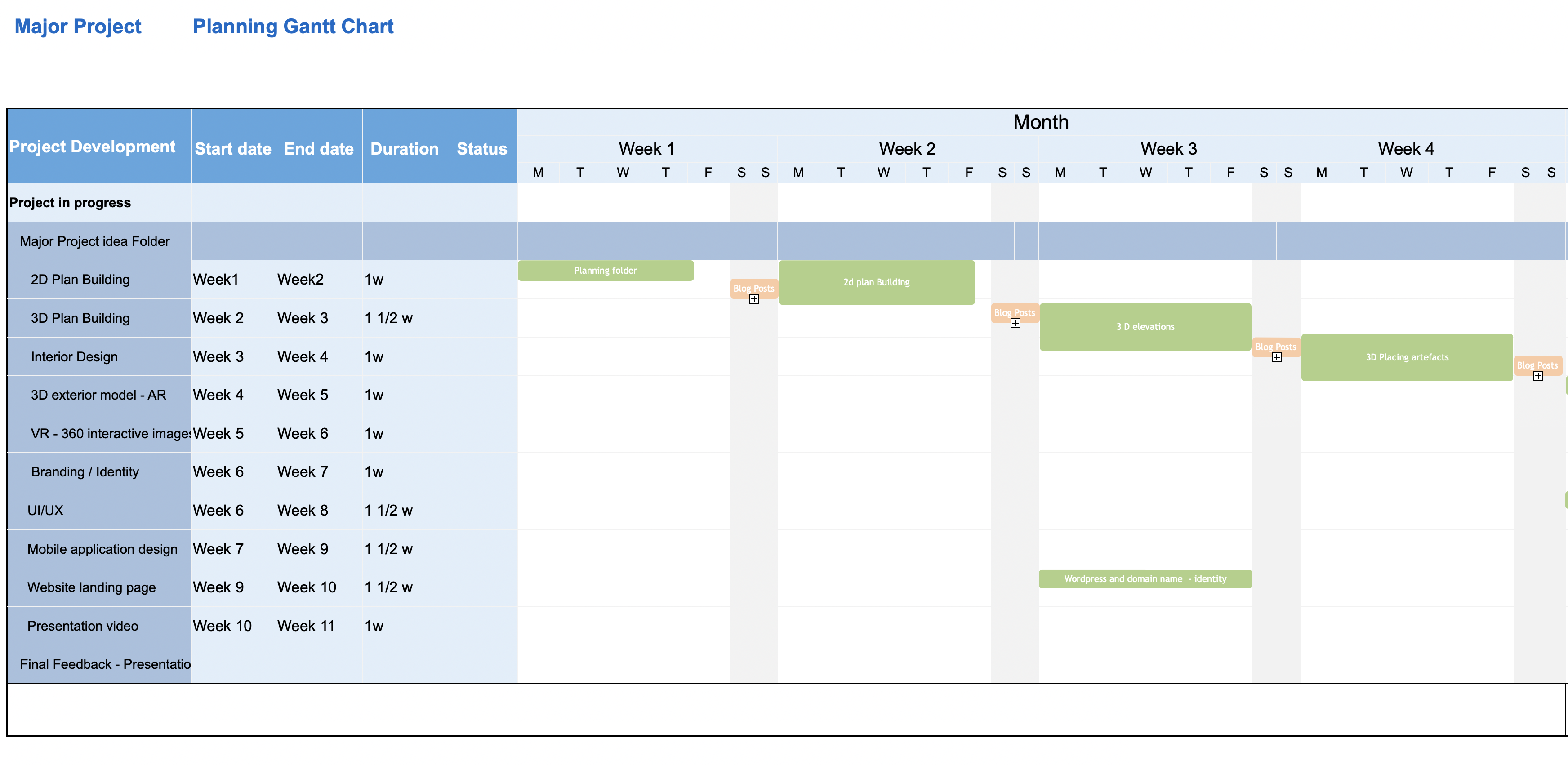
Discussing in time – design – execution terms, I started as I have known with dedicated professional programs such as Autocad and them 3D’s Max. In the first week, the evolution goes very slow, the project plans were not what I expected to be good enough, and I felt stuck, working in detail for things that I could easily change the next day, losing a lot of precious time. This phase put me in difficulties because I felt after one week and a half that I am behind with the time frame.
At this stage, I started looking for alternatives. I tried a few other programs that I knew, where, when I create the plan, to have already the elevation done, to visualise the 3D space automatically, earning time and being more productive.
I searched for programs on the computer and also on the tablet. A tablet application offered me the best option to visualise 3D, walking inside the volume, and exporting 360-degree images directly from the project. In addition, the program exported the project in 3Ds max format – for additional renderings.
Choosing this path was the best solution I find to optimise the time. I worked in both dimensions simultaneously, 2D and 3D, and I saved a lot of time. I that moment, I had the feeling that I am on the right track with my project. In the second stage, I selected and created the artefacts, including interior finishes and products. I revised the drawings with more specificity and detail.
Above is a 3D rendering of the exterior model after design development. The volume and the interior design were exported from the application. After that, I refined more the volume on 3Ds max for exporting through a plugin in Sketchfab. Also, because of Sketchfab, I saved time because it was easy to set the atmosphere, lights, some textures, etc.
That was the big challenge for this phase, to reduce the details that consume a lot of time or working on small parts to be able to craft the big volume and project in time to finish everything I proposed in my planning folder.